Applied Econometrics
A buildable, fully online postgraduate programme in Applied Econometrics — co-developed with Lancaster University Management School. Stack modules from a 20-credit certificate up to a 180-credit MSc, around your career, taught by world-leading econometricians.
About the programme.
About the course
Our Applied Econometrics postgraduate programme is built to be flexible. It allows you to tailor your learning to your specific interests, studying online around your career. Best-in-field experts lead all specialist courses for unrivalled quality. Choose from three core modules and twenty-three electives, and join us for as little as one module or build up to a full MSc.
How it works
Our buildable online programme is built with you in mind: learn with the best, around your career, and join a global network of econometricians wherever you are. All students receive a complimentary DataCamp subscription to consolidate their core data skills at their own pace.
IIF Certification
Our Postgraduate Courses in Applied Econometrics are certified by the International Institute of Forecasters — a recognition that affirms the academic rigour and real-world relevance of the programme, and places it among a select group of IIF-certified programmes worldwide. View the news article here
ECTS equivalence
We can provide a certificate of equivalence between credits obtained on our Post Graduate programmes and ECTS (European Credits), giving students the flexibility to transfer credits to other institutions — for example as part of a study-abroad programme or Erasmus exchange. 10 Lancaster University credits = 5 ECTS.
Entry requirements.
- ✓2:2 Bachelors degree or international equivalent
- ✓IELTS minimum 6.5 (or equivalent)
- ✓Apply from any country
- ✓Open to any academic background
Modules.
Select from 3 core and 23 elective modules to build your qualification — from a 20-credit Postgraduate Certificate of Achievement up to a 180-credit MSc. All modules are delivered fully online with live sessions, recordings, and tutor support.
Core Module
Elective Module
Dissertation
A combination of contact hours and private study.
Core Modules
Foundations of Econometrics
Time Series Econometrics and Forecasting



Microeconometrics and Panel Data Econometrics

Elective Modules
Advanced Forecasting for Time Series


Advanced Time Series Econometrics

Automatic Model Selection Methods
Bayesian Methods in Econometrics


Econometric Production Analysis



Econometrics of Energy Markets
Econometrics of High-Frequency Data

Econometrics of Program Evaluation

Machine Learning

Monte Carlo Simulation: Methods and Design
Natural Language Processing

Software for Econometrics and Big Data


Programming in Python

Causal Machine Learning



Econometrics of Poverty and Inequalities
Estimation Techniques for Linear and Nonlinear Models
What you'll be able to do.
Specify & estimate econometric models
Confidently build cross-section, time-series and panel models, evaluate assumptions, and interpret results for real economic and business questions.
Forecast with rigour
Apply modern forecasting methods — from ARIMA and state-space models to machine-learning approaches — and communicate uncertainty credibly.
Run causal & policy evaluations
Design and execute identification strategies (IV, DiD, RDD, matching) to estimate causal effects from observational data.
Lead with data in your organisation
Translate technical results into decisions — joining a global network of practitioners across central banks, regulators, consultancies and industry.
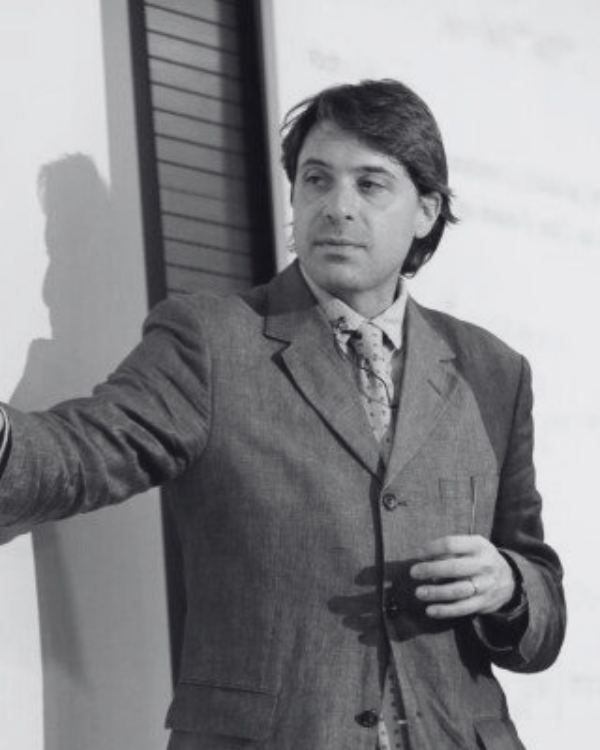
Professor of Econometrics at the University of Pavia and Honorary Professor at the University of Leicester School of Business, working on factor models, changepoint detection and asymptotic theory.

Full Professor of Applied Econometrics at Maastricht University, recognised for his work on co-movements, mixed-frequency data and non-causal models.

Professor of Econometrics at Aix-Marseille University and senior member of the Institut Universitaire de France, known for G@RCH and work on volatility modelling.
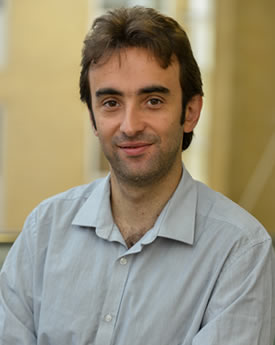
Based in the Department of Economics at Lancaster University Management School, researching dynamic factor models, macroeconometrics and forecasting.
Fees & funding.
Fees are payable per module, allowing you to pace your investment over up to 3 years. Indicative fees for the 2025/26 academic year. Speak with admissions about scholarships and employer sponsorship.
In their own words.
Students join us from central banks, academia and industry around the world — here is what they make of the experience.
Having already completed a more theoretical master's in economics, I was looking for a programme that could bridge the gap between academic foundations and applied econometric practice. The Timberlake/Lancaster MSc in Applied Econometrics delivered exactly that and more. What appealed to me most was the structure: flexible, modular, and professionally relevant. I was able to focus on areas directly aligned with my interests and work, including time series analysis and forecasting, while also exploring unfamiliar techniques such as machine learning and Monte Carlo simulation. The ability to customise the programme made it both practical and intellectually rewarding. What stood out most was the exceptional calibre of instruction. Each module was led by field-leading academics and practitioners, who brought cutting-edge knowledge to the sessions. The online format — with live sessions, recorded lectures, and hands-on assignments — made the content accessible and engaging, regardless of where I was based. The MSc helped me sharpen my econometric toolkit and I was pleased to gain extensive exposure to the tools, concepts, and software essential for effective analysis. DataCamp access was also a welcome bonus, supporting the parallel development of my programming skills. This MSc gave me the applied edge I was missing. It strengthened my econometric intuition, sharpened my coding workflow, and gave me the confidence to take on more complex empirical projects. I would recommend it without hesitation to anyone seeking a rigorous yet flexible path to applied expertise.
The Applied Econometrics programme has exceeded my expectations. It has given me an understanding of the relevant econometric theory, along with the necessary decision-making and programming skills to implement econometric analysis effectively. The curriculum is well designed, covering the core areas of econometrics, plus a wide choice of electives in time series, microeconometrics and machine learning. There is an emphasis throughout on current developments in applied econometrics, and classes on Python, machine learning and natural language processing provide an opportunity to develop skills in data science.
I am very pleased with the MSc programme. As I had already taken some Timberlake courses, I knew what to expect with regard to the quality of teaching and I was not disappointed. I am so satisfied with the lecturers. It is a privilege to attend their lectures and take advantage of their expertise. Apart from that, they are always ready and willing to clarify doubts. The course material is a very good guide. The slides and the recordings of the lectures were very good materials for each module I took. If I want to go deeper extra readings were recommended. Online learning and flexible delivery have been key to my participation in this program. It is the only way I can take an MSc programme.
Frequently asked.
Do I need a quantitative background to apply?+
A 2:2 Bachelors (or international equivalent) is required, but we welcome applicants from a wide range of backgrounds. We provide a complimentary DataCamp subscription so all students can refresh foundational maths, statistics and programming skills before live sessions begin.
How much time should I expect to commit per module?+
Core modules require around 200 hours of study in total (approx. 20 hours per week across a 10-week term), made up of 25 contact hours and 175 hours of private study. Elective modules require around 100 hours of study in total (approx. 10 hours per week), made up of 15 contact hours and 85 hours of private study.
Can I pause my studies between modules?+
Yes. The buildable structure means you can take a term off between modules and resume when it suits you, with up to 3 years to complete the full MSc.
Is the qualification recognised internationally?+
Yes. The MSc is awarded by Lancaster University — a triple-accredited business school — and ECTS equivalence can be issued on request for credit transfer.
What support is available?+
Each module has a lead academic plus tutor support, peer study groups, a programme director, and a dedicated admissions and student-experience team throughout your studies.
Apply, or speak with our admissions team.
Applications are reviewed on a rolling basis. Join an upcoming Virtual Open Day to meet the faculty and current cohort before you apply.